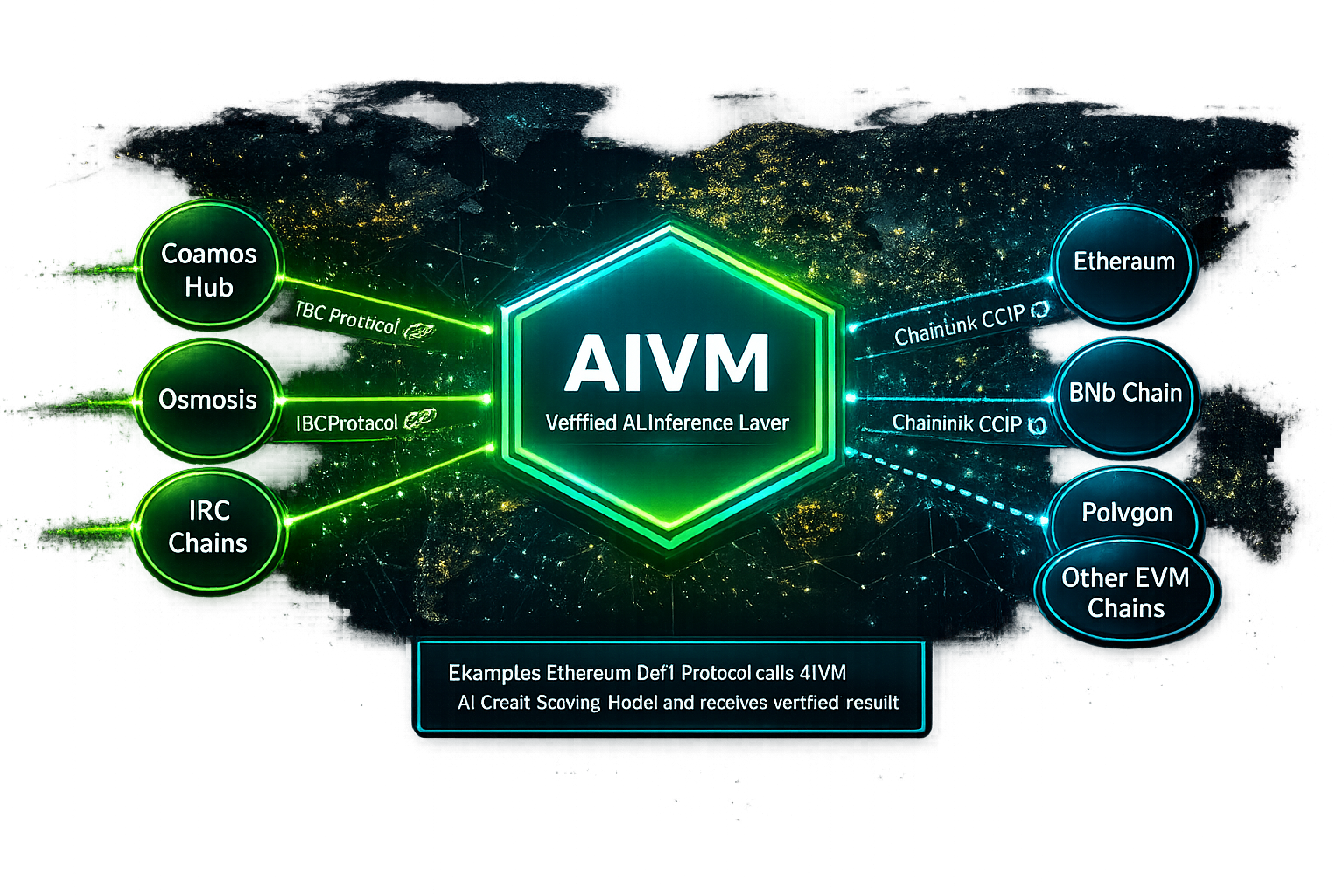
Every AI call your smart contract makes today is an act of faith. You're trusting an opaque API endpoint — run by a company you can't audit, on hardware you can't inspect, executing a model you can't verify — and treating the response as gospel. Your DeFi protocol prices a loan based on an AI credit score it cannot prove was computed correctly. Your trading bot executes on a sentiment signal that could have been fabricated by a compromised server. Your NFT generator runs on a model that might have been swapped out for a cheaper one overnight.
This isn't a theoretical problem. It's the structural reality of AI in Web3 right now: we've built an industry on trustless financial rails, then plugged in AI through the most trust-dependent interface imaginable.
AIVM — ChainGPT's purpose-built Layer-1 blockchain for decentralised AI — is an attempt to eliminate that contradiction. Not by bolting AI features onto an existing chain, but by building a new chain from scratch where AI inference is a first-class citizen of consensus: verifiable by default, private by design, and economically incentivised at every layer.
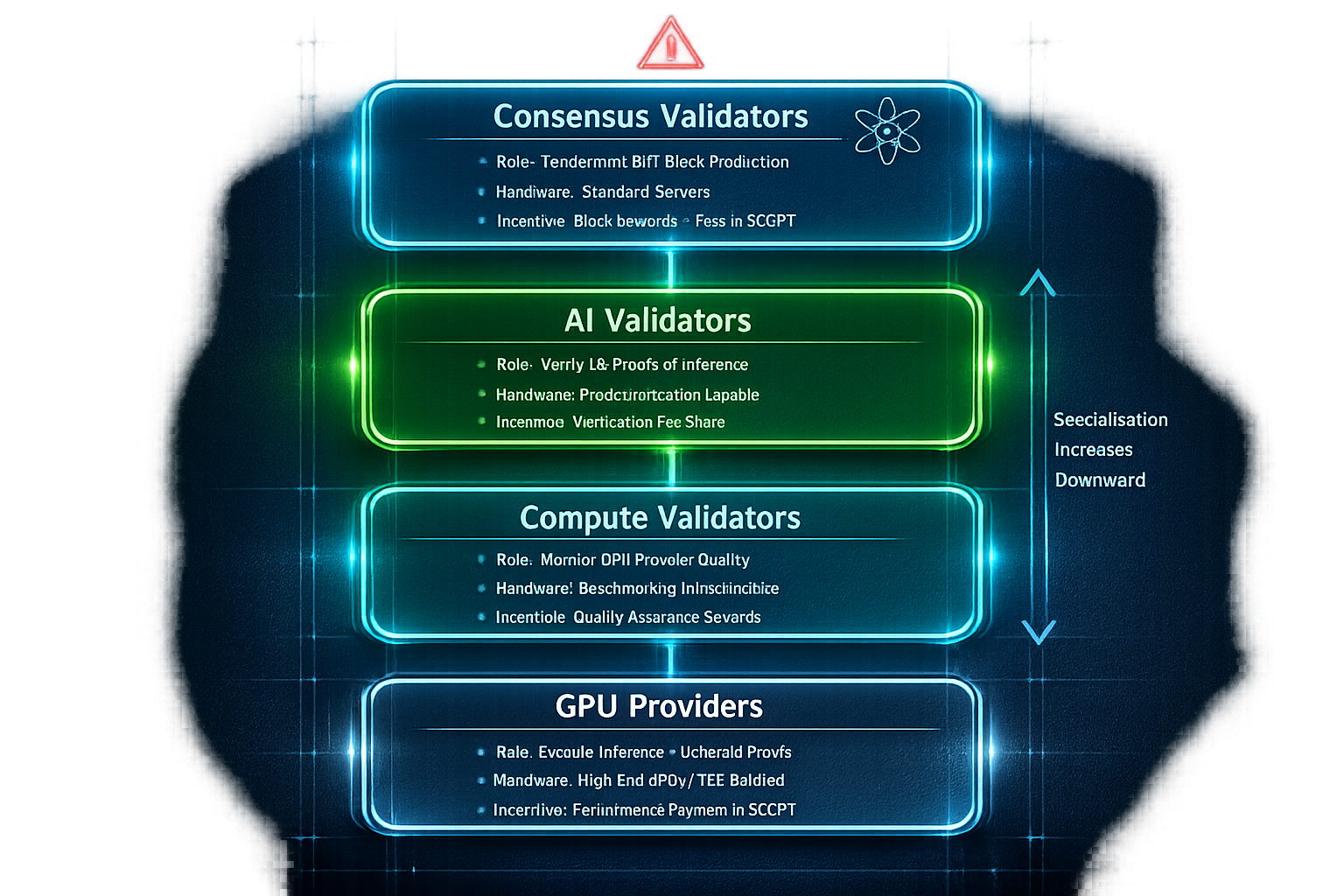
As of March 2026, AIVM's Public Testnet is live. The architecture is no longer a whitepaper abstraction — it's running code. This article dissects every technical layer: from Tendermint consensus to zero-knowledge machine learning, from dual-path execution to the four specialised validator types that have no precedent in production blockchains. This is meant to be more useful than the whitepaper for practitioners who want to understand not just what AIVM does, but why each architectural decision was made and where the honest tradeoffs lie.
[VISUAL:stats:4|Specialised Validator Types:Industry first|ZKML + TEE|Dual Privacy Stack:Defence in depth|Q2-Q3 2026|Mainnet Target:Public Testnet live now]
---